
Are You Accidentally Making Your Dog More Reactive? A Trainer Explains

If you own a reactive dog, you’ve probably spent more time than you’d like learning new ways to desensitize your dog to their triggers. Reactive dog behavior is often fueled by fear, frustration, or overstimulation–and while frustrating, it can almost always be improved.
But humans aren’t perfect, and the more information we take in, the more equipped we are to improve. However, too much information can get confusing and overwhelming, leading us to sometimes make mistakes that hurt rather than help our ultimate goals.
This is true for working with a reactive dog. There’s so much information out there that it’s easy to get overwhelmed, mix up methods, or come up with new patterns that end up hindering progress. This can lead to frustration that seeps into your dog training methods and creates a negative loop of frustration and setbacks.
To help reactive dog owners better combat this negative loop, I spoke with professional dog trainer and behaviorist Brooke Fagel. Owner and head trainer at Majestic Dog Training, Fagel provides positive reinforcement dog training in Palm Springs and Boulder.
Fagel attended veterinary school at Ross University, is a Certified AKC Canine Good Citizen Evaluator, and is a member of the Association of Professional Dog Trainers (APDT). Needless to say, she has a wealth of experience and expertise to empower dog owners for success.
Common setbacks in reactive dog training
According to Fagel, the following behaviors can actually make your dog more reactive. When working on your dog’s reactivity, it’s a good idea to keep these factors in mind and avoid any activity that could exacerbate the situation.
Approaching triggers too quickly

“One of the biggest mistakes owners make is unintentionally exposing their dog to triggers faster than the dog can handle,” explained Fagel. This can include “repeatedly pushing a reactive dog over threshold, whether that’s getting too close to other dogs, people, bikes, or stressful situations.”
A dog’s threshold is the point where a trigger is strong enough for them to notice, but not intense enough to cause them to shift emotional states. For example, if your dog barks at other dogs on walks, their threshold is right when they notice the other dog but haven’t begun barking yet. As soon as they’re triggered enough to begin barking, they’ve crossed the threshold.
If you’re putting your dog in situations where they are displaying a reactive response, they’ve already crossed the threshold. At this point, it can be extremely difficult to change their behavior.
As Fagel put it, “this often strengthens the reaction instead of improving it. Many owners also mistake flooding, forced greetings, or “they just need to get used to it” as socialization, when in reality it can increase fear, anxiety, and frustration.”
Ignoring the underlying emotion
“The goal is not simply to suppress the behavior, but to change the dog’s emotional response over time.”
When working on your dog’s reactivity, a good starting point is simply identifying the triggers and what emotion is behind them. You can learn a lot about your dog by putting together these patterns of behavior.
Most reactive dogs are displaying behaviors rooted in fear, anxiety, overexcitement, or a combination of these emotions. Like most things, these behaviors are better addressed when we get to the root of them.
“Another common issue is focusing only on stopping the barking, lunging, or growling rather than addressing the underlying emotion driving the behavior,” explained Fagel. “Reactive dogs benefit from distance, management, clear communication, and positive reinforcement that helps them feel safe and successful. The goal is not simply to suppress the behavior, but to change the dog’s emotional response over time.”
Inconsistent behavioral adjustments
Fagel emphasized the importance of consistency when working with reactive dogs.
“Allowing a dog to rehearse reactive behaviors on walks, at fences, or through windows can make those reactions stronger and more automatic,” she told us.
While working with a reactive dog can be emotionally exhausting at times, you’ll likely see the best results when you remain consistent. After all, your dog is constantly picking up new information and feedback from you. If you sometimes care that they bark or lunge, but sometimes don’t care if they bark or lunge, they’re not going to have a clear behavioral expectation.
“Every outburst is practice, so creating opportunities for success while gradually building confidence is often what leads to lasting improvement,” said Fagel.
What to do if you’re making your reactive dog’s behavior worse
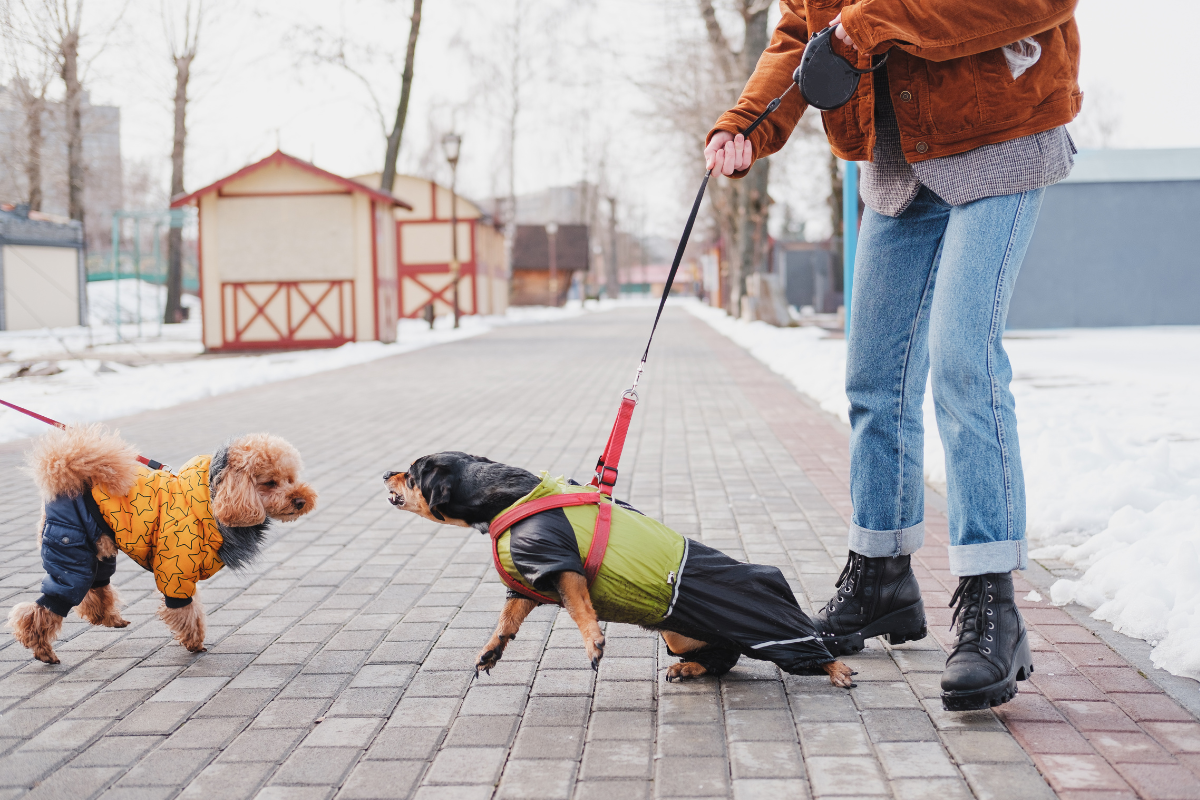
There’s no one-size-fits-all approach to working with a reactive dog. It’s on you as the owner or guardian to identify the patterns of behavior and figure out how to better manage it.
Fortunately, the more you learn about dog training, the more you’ll naturally come up with new methods to try. Ideally, you’ll learn to identify when something isn’t working so you can adjust your behavior, too.
If you’re worried your reactive dog can’t get better, take a break, take a deep breath, and look into new ways to approach the biggest pain points.
Don’t Worry, He’s Friendly helps reactive dogs in urban spaces thrive through dog training resources and education. Check out our other articles to learn more.
Written by: Macey Wolfer
Macey Wolfer is a freelance writer from Seattle. She wants to see more confident dogs and owners with a lower rate of shelter surrenders.
This content is for educational purposes only and is not a substitute for professional veterinary, behavioral, or training advice.