
Should I Use a Retractable Leash With My Reactive Dog?
Figuring out the right gear to use when walking a reactive dog can be a challenge. There are a lot of options on the market, and everyone seems to have an opinion about what’s right or wrong. In this case, there’s a fairly clear answer to the question of whether you should use a retractable leash with a reactive dog: no. There are much better alternatives.
How retractable leashes work
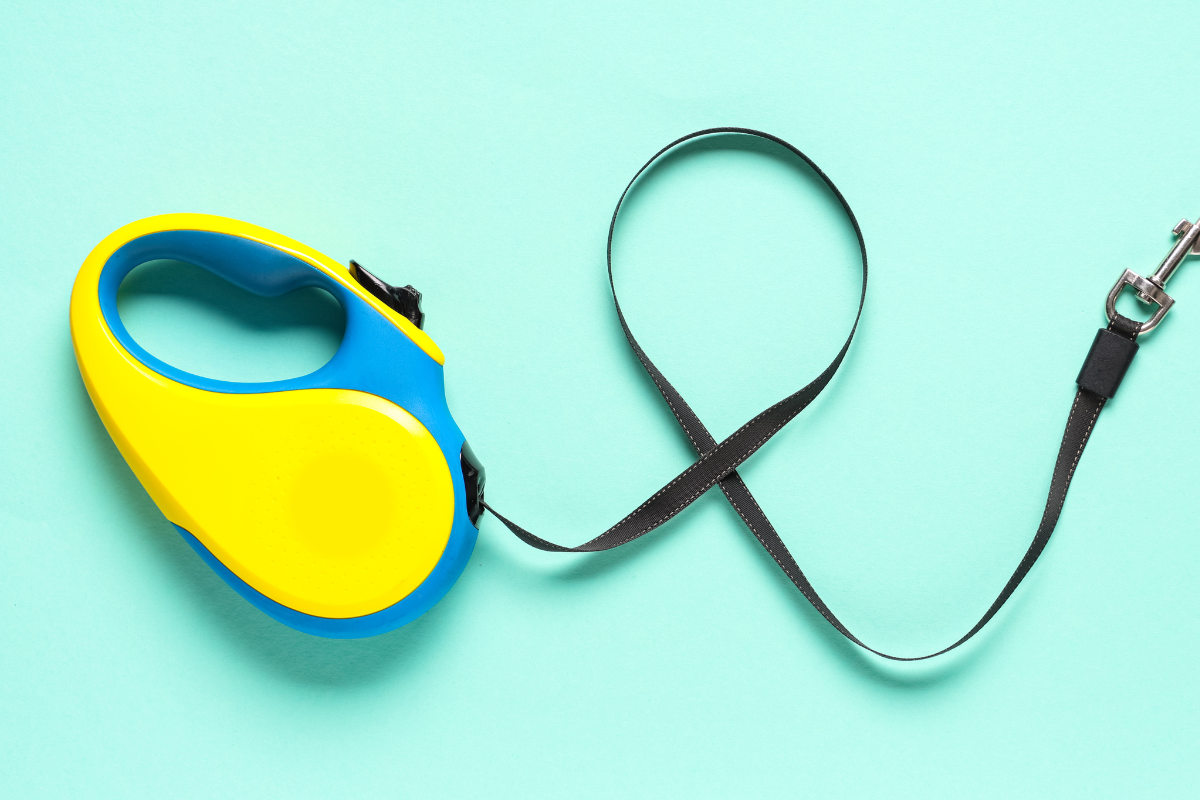
While retractable leashes come in various shapes and sizes, they tend to all follow a simple design pattern. A leash spool sits inside the plastic handle, and as your dog moves forward, it unspools to lengthen. When your dog gets closer, the leash spool goes backwards back into the plastic handle.
Retractable leashes also include a brake button and a lock. You can use the brake to stop the spool from releasing any more leash and the lock will hold the break in place.
They’re a popular option for owners who want to give their dogs a little extra freedom while on leash. Dogs can go an extra 10 or 20 feet when attached to a retractable leash, requiring less handling from their owners.
But reactive dogs aren’t typically the best use-case for retractable leashes. After all, owners are often looking for more control over their reactive dog, not less control and further distance to make corrections.
Let’s dive a bit deeper:
Why retractable leashes aren’t a good choice for reactive dogs

Maybe you’ve made the decision to keep your reactive dog away from dog parks but still want to give your pup some freedom to run. You might think retractable leashes are a good option, but here are some reasons to reconsider:
Retractable leashes have several safety concerns
Without listing off the details from horror stories across the internet, I’ll just say this: retractable leashes have a long history of causing injuries to humans and dogs.
Retractable leashes are made of a thin cord that can cause burns or severe injuries if they get wrapped around human or dog limbs. Additionally, if your reactive dog sees something and begins to run fast toward it, they could face a neck or spinal injury when they hit the abrupt end of the leash.
The extended length naturally adds more risk of wandering into the road or getting too close to other dogs, as well. This is a no-go for reactive dog owners who want to make sure their dog has space from others.
Plus, the cords themselves aren’t very strong. They’re thin and can easily break or fray, allowing your dog to get loose. Beyond the risk of injury from the cord snapping back and hitting you, this situation means your dog can get loose and potentially run into dangerous situations.
Retractable leashes encourage bad walking manners in reactive dogs
Most dogs should be close to their owners when on a walk, and reactive dogs are no exception. Even if your dog gets overexcited on walks and stresses you out, it’s important to keep them close for better training and safety.
But retractable leashes encourage the opposite. They allow your dog to walk far away from you and make their own agendas. Worst of all, they also encourage pulling. The more your dog pulls on the leash, the further they get to walk. Retractable leashes don’t produce slack, so your dog has an incentive to continue to pull forward instead of match your pace.
Retractable leash alternatives for reactive dogs

In general, four or six-foot leashes are the best options for reactive dogs. In fact, they’re probably the best option for any type of dog. Years back when I did dog 4H as a kid, we were only allowed to use six-foot leashes because that was the standard for safety and convenience. I think it still stands today.
You can choose your preferred leash material, so long as it’s strong and durable. Nylon, leather, biothane, and rope are common choices. All of these options are available in four or six-feet lengths, so you can play around with the type that feels best for daily walks.
Outside of daily walks, you can get an extra long training leash for other activities. These long leashes still provide tension that signals your dog can’t go any further, whereas retractable leashes continue to loosen until the dog hits the end abruptly.
Most extra-long training leashes are designed to handle everyday dog activities. They are typically more durable than retractable options, meaning you have less reason to worry about a failure leading to your dog getting loose or injured.
Plus, these types of leashes don’t wrap around legs, fingers, or other body parts to cause potentially serious injuries.
The bottom line: retractable leashes aren’t good for reactive dogs
While every reactive dog owner must make decisions that best fit their dogs’ needs, it’s important to know that retractable leashes come with more risks than rewards. Trainers rarely advise using retractable leashes because they simply aren’t worth the risks or bad walking manners they can bring.
Written by: Macey Wolfer
Macey Wolfer is a freelance writer from Seattle. She wants to see more confident dogs and owners with a lower rate of shelter surrenders.
This content is for educational purposes only and is not a substitute for professional veterinary, behavioral, or training advice.