
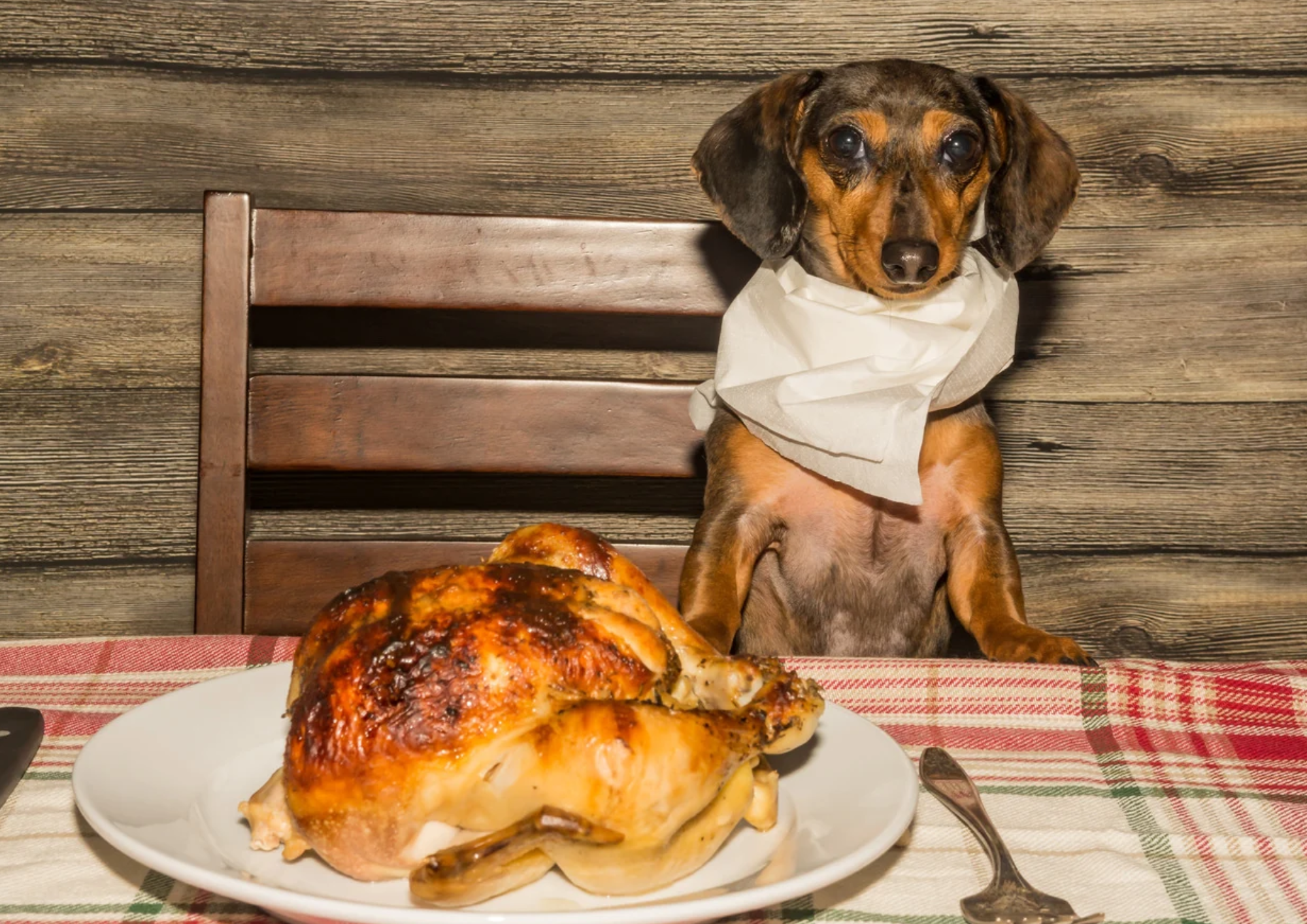
“Success might simply mean your dog felt safe, had choices, and wasn’t pushed beyond what they could comfortably manage.”
Ah, the holidays. An already stressful time for many can become especially frustrating when you have a dog that gets triggered by guests in the home. If you’re wondering how to host Thanksgiving with a reactive dog (or other holiday gatherings), read on for tips to make the whole event smoother.
If you're picturing a holiday event where guests come in and pet and love on your dog, don’t. Start by reframing your expectations. Hosting holidays with a reactive dog is not about forcing your dog to meet everyone and be a welcoming host. It's about creating a calm and neutral space where your dog feels safe and can regulate their emotions and behaviors. This often means creating a safe space away from the door, guests, and commotion. It can also include medications or calming supplements, lots of exercise beforehand to tire your pup, and playing soothing sounds that drown out the unfamiliar noises.
“A successful gathering doesn't mean your dog greeted everyone or spent the evening socializing,” explained Chris Edge, a certified dog trainer and founder of K9 Edge Dog Training. “Success might simply mean your dog felt safe, had choices, and wasn't pushed beyond what they could comfortably manage.”
Why hosting Thanksgiving and other holidays can trigger reactive dogs

If you are hosting loved ones for the holidays, there's a good chance you're running around stressed and focused on creating a pleasant event for everyone. Dogs pick up on the energy of their humans. But that doesn't mean that your stress is the only factor. It's often about other triggers involved, especially new guests entering the home.
“Much like ourselves, our dogs have a limited capacity for stress or excitement. As that capacity fills, their ability to regulate, problem solve, and respond to familiar cues lessens,” Edge explained. “The dog becomes less responsive and their tolerance disappears. It is at those times we expect more self-control and behaviour from them, when they are capable of even less. Repeated arrivals, new smells, and increased activity can flood our dog's capacity. Once they are at that level the only reset is space, time, and decompression.”
How to create a safe environment for your reactive dog when hosting the holidays
One of the best ways to set your reactive dog up for success when hosting holiday gatherings is to create a safe space for them to decompress and be away from the commotion. We've talked about this before when discussing the 4th of July, Halloween, and other triggering holidays.
You can use a crate or just another room as a main decompression space. Fill the space with their favorite blankets, toys, and treats. Make sure they’re in another room that blocks visibility of the holiday commotion.
It can also be helpful to play white noise or calming music to drown out some of the commotion. Edge also recommended including a puzzle toy to keep your dog occupied and focused on something other than new arrivals, sounds, and smells.
Know that your reactive dog is likely to be uncomfortable in a triggering situation. A decompression space is not a fix-all, but a tool that can help your dog work to self-regulate. Make sure that the space is clear of anything your dog could potentially get into and hurt itself with, including toys and chews that require supervision due to choking hazards.
Exercise your reactive dog before holiday guests arrive

It can be extremely beneficial to wear your dog out before holiday guests arrive. Go on a long walk or engage in your dog's favorite play before your guests arrive. A tired dog has already had the chance to blow off some steam, which can potentially help them better adjust to changes.
You will have to figure out what works best for your dog. But for many dog owners, a long walk with lots of sniffing can do wonders for preparing their reactive dog for a long day. Be aware of your dog’s other triggers, though. If going on a walk involves getting repeatedly triggered by other dogs in the area, you might be adding to their stress. In this case, you might want to seek out a quieter place to go on a walk or rent a private space to exercise your dog safely without going to the dog park.
Talk to your vet about calming supplements or medications
Calming supplements or anxiety medication can do wonders for families hosting Thanksgiving and other holidays with a reactive dog. For example, Herbsmith’s July Third calming supplements make a big difference for my German Shepherd when he needs some extra help adjusting to new environments.
But you should always talk to your veterinarian first to ensure it’s a safe choice for your dog. They can help you find the right supplement or medication for your dog’s needs, and give you tailored advice unique to your pet.
Explain the situation to guests and don’t force interactions

One of the most difficult parts of hosting the holidays with the reactive dog is dealing with the reactions of your guests. A great way to set everyone up for success is to give all of your guests a heads up that your dog gets triggered by new people in the home, and that you’ll be setting up a safe space for your dog separate from the main event.
Communicate that your dog should be left alone unless otherwise requested by you. If you want to try out an interaction when your dog appears calm and neutral, that’s a decision you have to make with your best judgment. But don’t allow others to enter the room or try to interact with your dog without permission. This is especially important if there are children in the home who might not understand dog body language.
“Check in with your dog often. Are they able to offer recall, simple behavior, and settle momentarily, or are they flooded and unable to disengage? Allow for periodic rest or complete separation as needed,” advised Edge. “Manage their interactions and observe the subtle changes that communicate how they are handling the activity. The key is to be proactive rather than reactive and instead of chasing behavior, guide their activity.”
Reactive dogs don’t necessarily have to spend the whole event in a separate room. But they should be regularly assessed to see if they need space or a moment to decompress. For some dogs, it might be once or twice, whereas other dogs may need to spend the whole time away from the event.
While it can be awkward or disappointing to some people who would like to spend time with your dog, it's important to communicate that you're looking out for your pet’s best interest.
Final thoughts on holiday hosting with a reactive dog
Owning a reactive dog can take an emotional toll, but it doesn’t have to limit your life. If you want to host guests at your home for the holidays, you can. You just need to be proactive about it.
“One of my favourite sayings is you can't train your dog IN a moment of crisis, you have to train FOR them,” said Edge. “If the only time we are managing their behaviour is in the overwhelming presence of unfamiliar people, we are going to frustrate the dog and ourselves.”
Leading up to your holiday hosting, you can work with your dog to desensitize them against their triggers. But it’s not an easy or quick fix. It takes dedication and patience.
If you’re worried about hosting Thanksgiving with your reactive dog, time is limited to work on your dog’s behaviors. But that doesn’t mean you can’t make a point of exercising them daily and talking to your vet about ways to help manage their behavior.
Don’t Worry, He’s Friendly is your home for reactive dog training guidance and support.
Check out our other articles to learn more about reactive dog training.
Written by: Macey Wolfer
Macey Wolfer is a freelance writer from Seattle. She wants to see more confident dogs and owners with a lower rate of shelter surrenders.
This content is for educational purposes only and is not a substitute for professional veterinary, behavioral, or training advice.