
Can Reactive Dogs Live In the City?
Living in the city with a reactive dog and wondering if you’ve set yourself up for failure? Let’s start with a deep breath. Reactive dogs in the city can be a challenge, but it’s not game over for you.
Reactive dogs can live in the city when their owners take special care to meet their needs without going past their threshold. This can mean walking at less-busy hours, finding less crowded places to play, and making sure the dog gets its exercise and mental needs met on a daily basis.
I actually started Don’t Worry, He’s Friendly after living in the city with a reactive rescue dog. We’ve worked past his reactivity now, but I witness other owners struggle on a daily basis. Every single walk we go on, we see a dog and its owner struggle to get through their own walk. And unfortunately, I often see them make reactive dog training mistakes that set them back.
Reactive dogs in the city can be a challenge
Reactive dogs are challenging in general. But for those in the city, it can be even more of a frustrating experience because of proximity to triggers. Reactive dogs living in rural areas don’t face as many other humans, dogs, and loud noises and commotion that the city can bring.
But that doesn’t mean reactive dogs can’t survive and even thrive in the city. It just takes a bit of extra work and patience.
Meeting the physical and mental needs of a reactive dog in the city
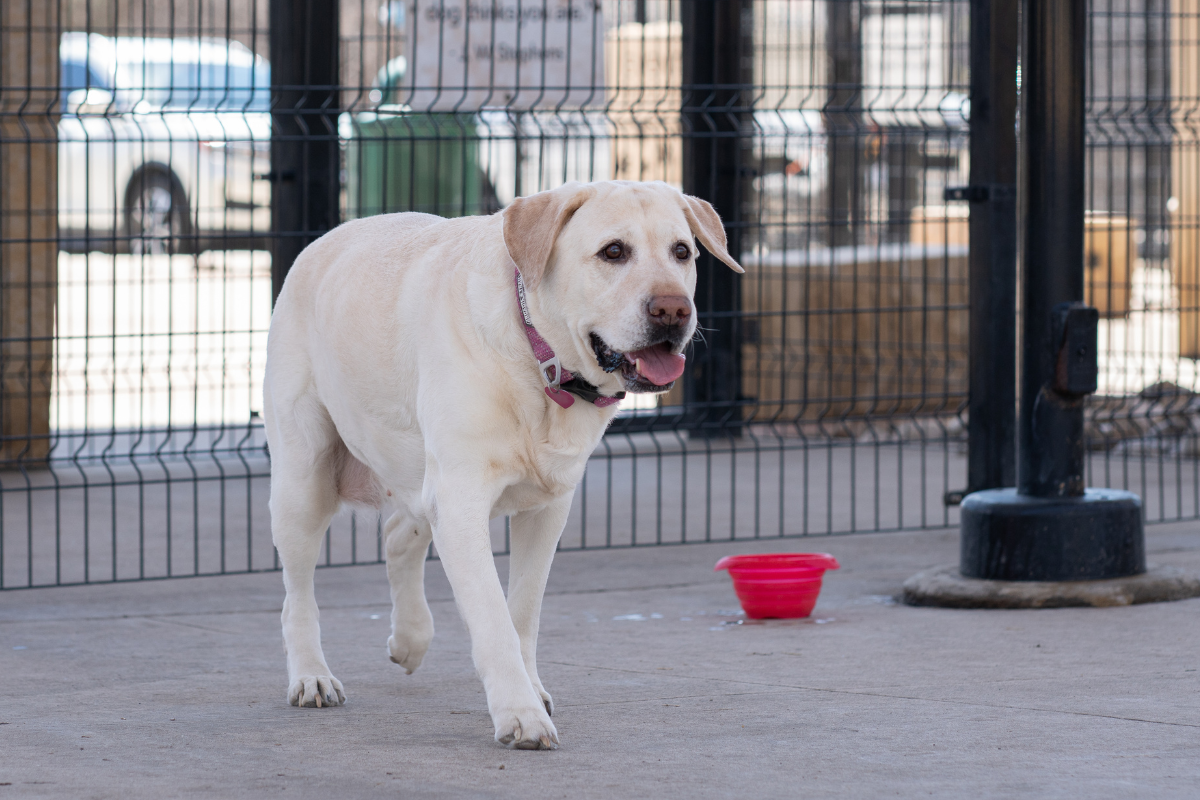
Make sure you know your breed’s physical and mental requirements. For my German Shepherd mix, they’re extensive. We aim for at least 60 minutes of exercise and 30 minutes of mental stimulation, which is sometimes paired with physical exercise and sometimes done on its own. All together, we aim to reach at least 90 minutes of stimulation to keep his energy levels maintained and his mental health in good shape.
Smaller or less demanding breeds may not need this level of attention. But many reactive dogs need more exercise and mental stimulation than they receive. And meeting those needs first can go a long way in helping their overall anxiety levels and reactivity.
There are plenty of ways to safely exercise a reactive dog. You don’t have to go on stressful crowded walks all the time. Try incorporating more mental stimulation games that build confidence and utilize new parts of your dog’s brain alongside physical activity during less-crowded hours.
Create distance from triggers and go slowly
If you walk out into the street and suddenly your dog is in a sea of triggers, barking at others and immediately getting disregulated, you’re not going to set yourself up for a successful outing.
You have two options:
If you’ve packed your patience, you can use this as an opportunity to desensitize your reactive dog to the first part of their walk. Do not exit the building until they’re calm. Don’t get frustrated or mad at your dog. Just wait until they’ve settled and are in a calm state.
Walk outside and reward them with high-value treats if they maintain that level of calm. If they get hyped up immediately, walk back inside the building. Repeat until you are able to walk through the entryway with ease. This can take a lot of practice. Don’t expect it to go perfectly the first time. But the calmer you can start the walk, the better your dog will understand the expectation of calm.
If you aren’t in the zone to patiently work on this exit, walk briskly and head straight to an area that is not crowded and allows your dog to have distance. Stick to these spaces and meet your dog’s exercise needs without crossing his threshold.
Tips for reactive dogs in the city
Aim for neutrality
If you have a reactive dog in the city, your goal is to make the presence of other dogs, people, and various triggers a neutral stimulus. They shouldn’t get excited nor should they get scared when they are faced with these situations. They should just carry on with their day.
You can learn more about socializing a reactive dog here.
Build safe routes
Get to know your neighborhood routes and stick to the quieter streets. Avoid any spaces that block your ability to cross the street or otherwise create distance from triggers when needed.
You might also notice that your routes are better suited for certain times of the day. Many reactive dog owners choose to walk their dog during non-peak hours to avoid as many triggers.
Look for hidden gems in or outside of your neighborhood
It’s a good idea to scope out your neighborhood for quiet hidden spaces that your dog can better thrive in. Look for less-traveled parks or open fields that don’t get a lot of foot traffic. You could even take your dog on a drive further out of the busy parts of the city to find quiet, safer spaces for them to exercise.
Start small and build up
I’ve talked extensively about my experience helping my overexcited dog remain calm on walks. All of our success came from working within his threshold and taking baby steps. Here’s a quick synopsis:
I taught him that we don’t go on walks until we’re calm. If he busted out the door, we’d turn around and start again. We’d continue this until he made the connection that his calm behavior is what leads to a fun walk.
We’d walk to a busy park. He’d get overstimulated quickly with all the sounds, people, and dogs.
We’d start on the outside of the park. I’d give him high value treats when he’d turn his attention away from the commotion and focus on me.
We’d leave having successfully desensitized him to the outside of the park.
The next time, we’d work our way inside, slightly. We’d do the same thing as above, but this time slightly closer to the triggers.
We’d repeat again another day, slowly making our way inside the park.
Finally, we made it to the center of the chaos. And by this point, we’d babystepped our way here, making him confident and calm enough to handle the situation.
All in all, reactive dogs can thrive in the city. They just need a little extra help and a patient owner who is willing to work with them.
Don’t Worry, He’s Friendly helps reactive dogs in urban spaces thrive. Check out our other articles to learn more.
Written by: Macey Wolfer
Macey Wolfer is a freelance writer from Seattle. She wants to see more confident dogs and owners with a lower rate of shelter surrenders.
This content is for educational purposes only and is not a substitute for professional veterinary, behavioral, or training advice.