
When to Dose CBD for Dogs: Everyday Reactivity vs. Stressful Events
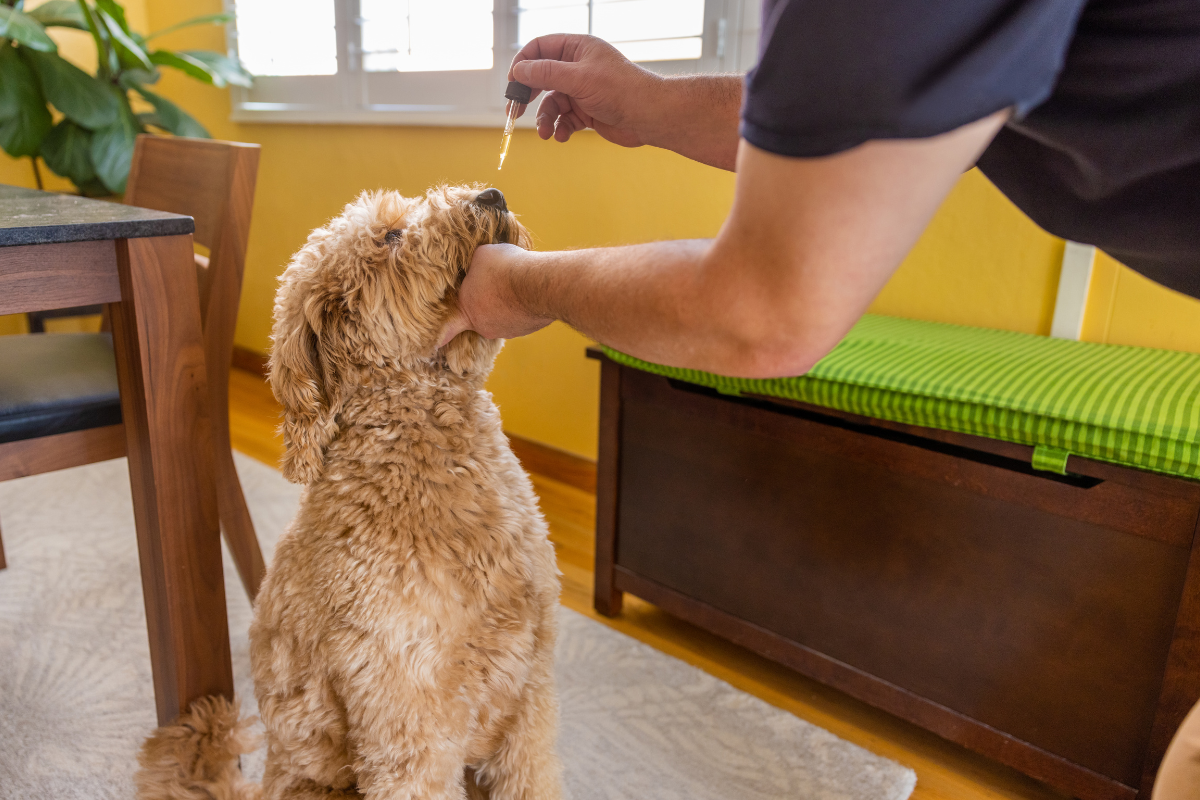
After the 2018 Farm Bill legalized cannabidiol (CBD), the hemp-derived substance was seemingly everywhere. Shops were slinging CBD pillows, CBD toothpicks, even CBD-infused activewear. While the dust has settled around CBD, there are still some science-backed, beneficial uses for the compound, including CBD for reactive dogs.
CBD has the potential to improve nervous behaviors and reduce anxiety-driven behaviors and reactivity. For predictable events, our expert source recommends dosing your dog 1.5 to 2 hours ahead of time. For everyday anxiety, CBD accumulates over time to create a steady effect and can be given at any time throughout the day.
Before diving into expert insights, let’s get on the same page about CBD and how it works.
The basics of CBD for dogs
Humans and other mammals all have an endocannabinoid system (ECS) responsible for a number of biological functions. A complex series of cell-signaling pathways that work to maintain homeostasis through the body, the ECS is comprised of endocannabinoids (lipid signaling molecules that act as neurotransmitters) and endocannabinoid receptors (cellular proteins that interact with endocannabinoids).
Cannabinoids like CBD can also interact with endocannabinoid receptors. When humans (or dogs) consume CBD, the compound indirectly impacts ECS receptors. As receptors are found throughout the body, CBD can influence the behavior of many bodily functions.
In short and easy terms, CBD interacts with your dog’s endocannabinoid system, influencing the behavior of various bodily functions.
CBD has been suggested to help dogs with pain, arthritis, itchiness, seizures, and various behaviors. Since we’re talking about CBD for reactive dogs in this piece, we’re going to focus on the behavioral side.
Does CBD always work for reactive dogs?

As a general rule, CBD for reactive dogs is used to create a more stable, calm baseline to help your dog get through triggering experiences.
For example, you might use CBD to help desensitize a reactive dog to situations that stress them out. If your dog gets reactive toward other dogs, you could potentially use CBD to help lower their initial fear reaction when you work with them to desensitize. This could look like dosing CBD an hour before you walk toward a busy park to allow your dog to enter the situation with less stress. (Of course, you’ll still want to keep your dog within their threshold as you work through these situations.)
“Behaviorally, a dog's response depends a lot on the nature and severity of its fear,” Jeffrey Powers, DVM and president of the Veterinary Cannabis Society told us. “A dog with mild, situational startle tends to do better with CBD than one with deep-seated, clinical noise phobia.”
And it doesn’t always work.
Powers explained that CBD works on two levels: temperament and metabolism. Some breeds process it completely differently than usual due to a genetic variant.
“It's broken down primarily by a liver enzyme called CYP1A2, and there's a genetic variant that knocks out that enzyme's function, especially common in beagles and Irish wolfhounds,” explained Powers. “Dogs carrying it process CBD differently, which affects both how well it works and their drug-interaction risk.”
Dosing CBD for dogs during predictable events vs. everyday reactivity
With the 4th of July around the corner, many dog owners are wondering how to keep their reactive dog safe during fireworks chaos.
For predictable events like fireworks, Powers advises that timing is everything. ‘
“Oral CBD oil peaks in the bloodstream about 1.5–2 hours after a dose, with a short half-life, so for a predictable event you want to give a single dose roughly 1.5–2 hours before the fireworks start — not the morning of,” he told Don’t Worry, He’s Friendly. “One study found no benefit when CBD was given 4–6 hours ahead, which tells us the window matters.”
Everyday reactivity and behavioral concerns require a different approach.
“CBD accumulates with daily dosing and reaches steady-state over time, so chronic anxiety benefits from consistent daily use rather than a one-off. Either way, CBD works best as part of a broader calming plan: a safe space to retreat to, white noise or music to mask the booms, and a calm owner, since dogs take cues from us.”
Powers also explained that CBD works best when given with some fat, since the compound is fat-soluble.
“Dosing it alongside food or a bit of added lipid significantly increases how much gets absorbed, so the same dose works harder,” he told us.
When should reactive dogs not use CBD?
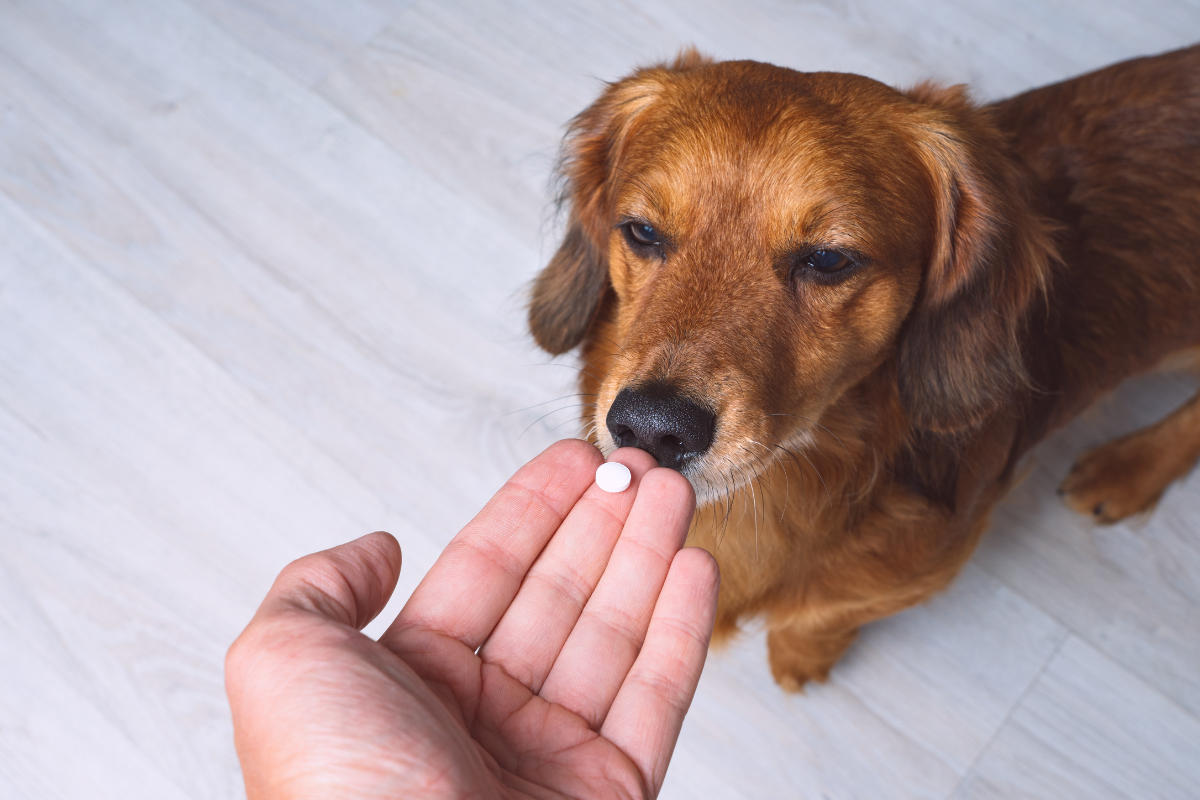
Not every dog benefits from CBD use. And when it comes to behavioral supplements or changes, it’s always important to talk with a veterinarian first. Powers advises against CBD for reactive dogs in a few scenarios. First, with drug interactions.
“CBD uses the same CYP1A2 liver pathway as many common medications. I'd want a veterinarian involved before adding it for a dog already on other drugs,” he explained. “I'd also monitor dogs with existing liver concerns, since transient liver-enzyme changes have been noted in some studies.”
While it’s always important to consult with your vet before adding CBD to your dog’s routine, it’s especially important if they’re already on medications.
When it comes to clinical phobias, CBD might not do the trick, either.
“For a dog with true clinical noise phobia, CBD shouldn't replace established behavioral medicine or prescription therapy,” said Powers. ‘The better-controlled fireworks studies tested CBD alongside or against drugs like trazodone, not as a standalone fix.”
Consult with your vet and the product label
Once you’ve received the OK to give your reactive dog CBD, you can give your dog the compound from a reputable brand. CBD for pets is a fairly unregulated industry, so you’ll always want to look for brands with good reviews, quality ingredients, and third-party testing that ensures purity and potency. Don’t give your dog human CBD products as they’re not formulated in pet-safe doses.
Once you’ve found a quality product, refer to the label for information about how to dose your dog. Each product has a unique formulation and recommended use, so it’s best to follow instructions from your veterinarian paired with the recommended usage on the label.
Don’t expect CBD to be a magic fix for your reactive dog. Instead, think of it as a way to improve their ability to regulate themselves when faced with triggers. CBD has the potential to lower their overall stress levels, making it easier to help your reactive dog get better.
But it doesn’t always work, products range in quality, and it’s not always safe for every dog.
Don’t Worry, He’s Friendly helps reactive dogs in urban spaces thrive. Check out ourother blogs to learn more about reactive dog training.
Written by: Macey Wolfer
Macey Wolfer is a freelance writer from Seattle. She wants to see more confident dogs and owners with a lower rate of shelter surrenders.
This content is for educational purposes only and is not a substitute for professional veterinary, behavioral, or training advice.