
Is Your Dog’s Reactivity a Medical Issue? A Veterinarian Explains When to Get An Evaluation
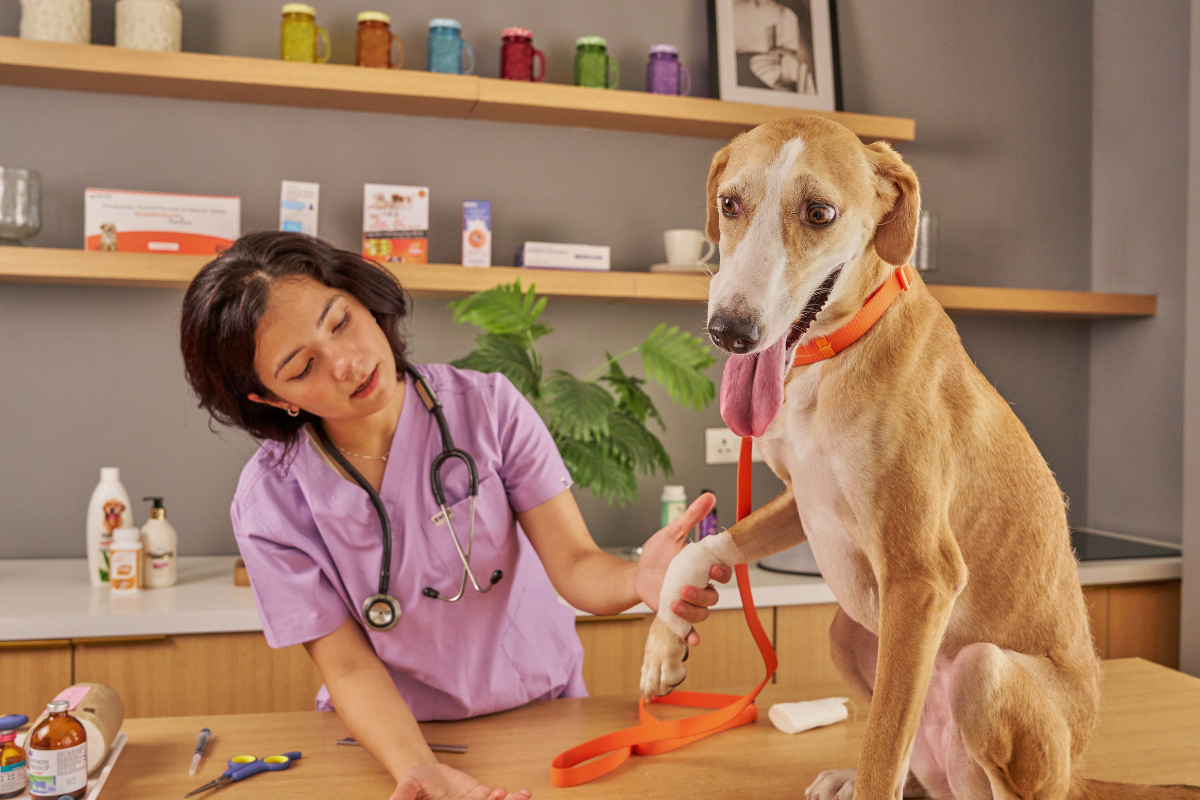
Reactive dog behavior can stem from many places. For some dog owners, it's obvious. Maybe their dog experienced a traumatic event that directly caused a fear of a certain trigger. In other cases, reactivity stems from poor socialization at a young age or learned behaviors from the past. Occasionally, dog reactivity stems from a medical issue. If you're wondering when to see a vet for your dog's reactivity, read on.
When should I consider a vet evaluation for my dog’s reactivity?
“Once medical issues have been identified and managed, many dogs are much more receptive to training and behavior modification.”
“A veterinary evaluation should be considered whenever the dog's behavior becomes severe enough to interfere with learning or when the reactivity is escalating despite appropriate training efforts,” explained Dr. Athena Angela Gaffud, DVM and owner of CountryVetMom.
If your dog's behavior has reached a level that makes it difficult to even work with them, it's probably time to consider visiting a vet. One of the key ways to train a reactive dog is to identify their triggers and slowly desensitize them so they are more confident and neutral in situations that previously cause them to be reactive. If your dog's behavior is making it difficult to even try to work on this behavior, there could be a medical issue that should be evaluated by a veterinarian.
In general, reactive dog training should lead to improvement. Of course, there are some outliers, especially when it comes to reactive dog training mistakes that might be making the behaviors worse. But if you have been following all of the best practices and putting in consistent effort to work on your dog's behavior and only seeing escalation in return, this could be a sign something deeper is going on.
“A sudden onset of reactivity, particularly in an adult or senior dog, also warrants a medical evaluation,” added Gaffud.
“Training and behavior modification are essential components of treatment, but they are most effective when the dog is physically healthy and emotionally capable of learning,” she explained. “If an underlying medical problem such as pain, neurologic disease, hormonal imbalance, or chronic illness is contributing to the behavior, addressing that condition is an important first step. Once medical issues have been identified and managed, many dogs are much more receptive to training and behavior modification.”
Sudden change in behavior is an overlooked red flag for medical problems

“Behavior is an important indicator of a dog’s overall health, and sudden changes should be approached the same way we would any other new clinical sign.”
Identifying medical red flags can be difficult as a reactive dog owner. There's a ton of information circulating around the internet and dog spaces about how to train and react to your dog's behavior. It's easy to overlook certain situations or behaviors that seem innocuous but might actually be a sign of something more serious.
“One of the biggest red flags is a sudden change in behavior, particularly in an adult dog that was previously comfortable in situations that now trigger barking, growling, lunging, or snapping,” Gaffud told us. “Many owners assume the dog has simply become ‘more reactive,’ but an abrupt change in behavior should always prompt a veterinary evaluation.”
Anytime a new behavior emerges with your dog, it's important to keep a close eye on it and try to find the root cause. New reactive behavior is often attributed to pain, and unfortunately, dogs cannot tell us when they are experiencing painful symptoms.
“Conditions such as osteoarthritis, dental disease, ear infections, spinal pain, or even gastrointestinal discomfort can lower a dog's tolerance for stress and make them much more likely to react defensively,” said Gaffud. “Medical conditions affecting the brain, endocrine system, vision, or hearing can also contribute to behavioral changes.”
Sudden changes in behavior aren't the only thing to look for, though. Other red flags may include decreased activity, reluctance to be touched, appetite changes, sleep changes, or changes to vision and hearing, according to Gaffud.
“Behavior is an important indicator of a dog's overall health, and sudden changes should be approached the same way we would any other new clinical sign.”
How can a medical evaluation improve reactive dog outcomes?
“Behavior and physical health are closely connected, and whenever a dog develops new or worsening reactivity, a veterinary evaluation should be part of the plan before assuming it’s solely a behavioral problem.”
Getting your dog evaluated for medical issues is not going to immediately change their reactive behavior. But it will offer a solid starting point for better understanding the root cause, which can help you strategize ways to work around the problem and bring your dog to a healthier position. For example, if they're reactivity is deeply rooted in pain, it will likely improve as you address the pain itself.
“One common example involves dogs with chronic pain from conditions such as osteoarthritis, spinal disease, or dental disease. These dogs may be described as reactive because they growl when touched, become defensive during handling, or seem unusually irritable around people or other dogs. In many cases, the behavior is a response to discomfort rather than a primary behavioral disorder,” explained Gaffud.
It's unlikely that addressing medical conditions that contribute to your dog’s reactivity will act as a magic wand to transform their behavior. But you can expect to start seeing more progress as you train free from outside medical conditions adding to their reactivity. (However, non-reactive dogs who suddenly became reactive due to a medical condition may actually experience the magic wand-like effect once they're pain or medical issue is addressed.)
“It's a good reminder that behavior and physical health are closely connected, and whenever a dog develops new or worsening reactivity, a veterinary evaluation should be part of the plan before assuming it's solely a behavioral problem,” added Gaffud.
If you notice a sudden change in your dog's behavior or are concerned that their reactivity may be rooted in a medical condition, it's a good time to get evaluated by a professional.
To learn more reactive dog training tips and insights, check out the other articles on Don't Worry, He's Friendly and subscribe to our newsletter below.
Written by: Macey Wolfer
Macey Wolfer is a freelance writer from Seattle. She wants to see more confident dogs and owners with a lower rate of shelter surrenders.
This content is for educational purposes only and is not a substitute for professional veterinary, behavioral, or training advice.